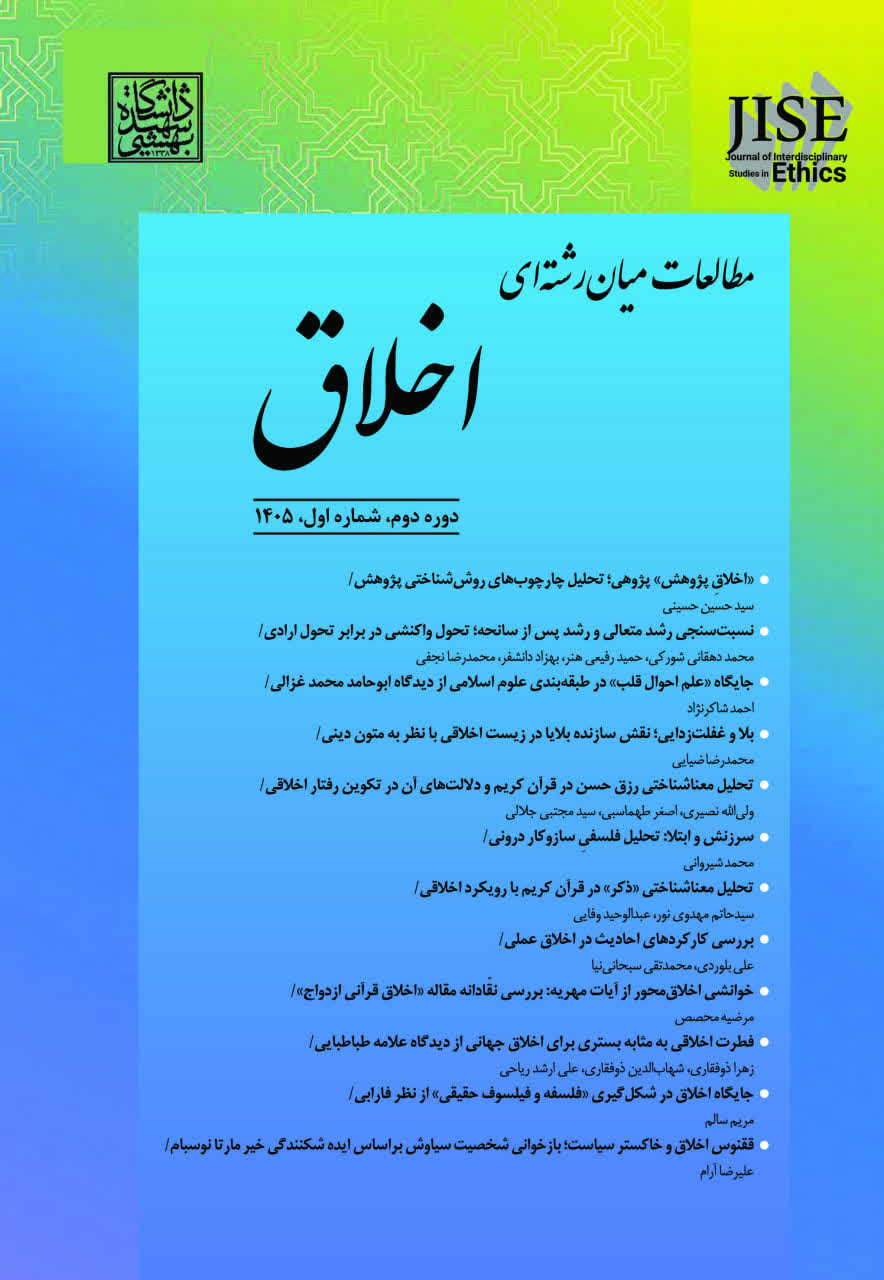
مطالعات میان رشته ای اخلاق

مطالعات میان رشته ای اخلاق

بلا و غفلت‌زدایی؛ نقش سازنده بلایا در زیست اخلاقی با نظر به متون دینی

نوع مقاله : مقاله پژوهشی

نویسنده
دکتری فقه و معارف اسلامی با گرایش تاریخ اسلام، جامعه المصطفی العالمیه و پژوهشگر همکار پژوهشگاه بین‌المللی المصطفی.
10.48308/jiethics.2026.106926
چکیده
براساس منابع دینی، خداوند جهان را برای انسان آفریده و هدف نهایی از آفرینش انسان، رسیدن او به قرب الهی است. گاهی انسان‌ها به خاطر توجه بیش‌ازحد به دنیا و لذات مادی از هدف اصلی آفرینش ‌خود غفلت ورزیده‌اند و در دنیای مادی و لذت‌های زودگذر آن غرق می‌شوند؛ از سوی دیگر خداوند متعال که خیر بندگانش را می‌خواهد برای متوجه کردن انسان به هدف آفرینش و غفلت‌زدایی از او، راهکارها و قواعد و قوانین فراوانی را برای هستی در نظر گرفته است که از آن جمله بلایایی است که بر انسان عارض می‌شود؛ بدین‌ترتیب مسئله بحث این است که بلایا چه نقشی در غفلت‌زدایی از انسان دارند؟ این مقاله با روش تحلیلی- توصیفی، ضمن بهره‌وری از منابع قرآنی و روایی و فقهی و بایسته‌های قرآنی و حدیثی به این سؤال پاسخ داده است. با توجه به آیات و روایات به نظر می‌رسد بلایا از آن‌‌جهت که موجب رهایش وابستگی انسان از امور دنیوی می‌شود و نیز بدان‌‌جهت که ناتوانی و عجز انسان را در مقابل حوادث به انسان گوشزد و یادآوری می‌کند، می‌تواند نقش قابل‌توجهی در غفلت‌زدایی از انسان ایفا نماید و او را به درک و توجه به هدف اصلی‌اش از خلقت وادار کند.
کلیدواژه‌ها

عنوان مقاله English

The Role of Calamity (Bala) in Removing Negligence; The Constructive Role of Calamities in Ethical Life according to Religious Texts

نویسنده English

Mohammadreza Zeyaei
PhD in Islamic Jurisprudence and Islamic Studies, Al-Mustafa International University.
چکیده English

Introduction: Negligence in Islamic thought is not merely a momentary lapse; rather, it is a form of existential forgetfulness that distances human beings from God’s remembrance, the divine blessings, the purpose of creation, and the truth of life. Verses and narrations describe negligence as a veil over the heart and an impediment to insight—an unlit fire that leads to hardness of heart, moral indifference, and the collapse of human relationships.
From a social perspective as well, negligence results in stagnation and widespread harms; as ʿAmīr al-Muʾminīn (peace be upon him) considers the smallness of negligence to be a sign of progress, and negligence itself to be a cause of the ruin of societies. Calamities and crises—whether natural or human—by disrupting the ordinary course of life, provide an opportunity for awakening from this negligence. In such moments, a person confronts the helplessness of apparent causes, and the hidden layers of reality become manifest. Religious scholars emphasize that calamities, within the framework of divine wisdom, can serve as mirrors for returning to one’s innate nature (Fiṭra) and for re-reading humanity’s place within the order of creation.
A proper encounter with crises, grounded in Qur’anic and narrational teachings, creates an opportunity for spiritual transformation and for escape from negligence. Despite the existence of numerous studies on negligence and its dimensions, examining the role of calamities in the process of negligence-remedy (negligence eradication) has not yet been undertaken in the form of an independent research study. This academic gap highlights the necessity of the present study.
Findings: According to verses and narrations, humans are created to attain divine proximity and are endowed with numerous blessings; however, engagement in worldly affairs leads them to existential negligence, causing the remembrance of God, blessings, and the purpose of creation to fade behind this forgetfulness. From the perspective of Islamic teachings, calamities are one of the significant factors in alleviating negligence, as they create interruptions in the usual flow of life, revealing human weaknesses and the impermanence of the world while reminding individuals of blessings such as health and security.

Widespread crises, especially global pandemics, can cleanse the rust of negligence from the hearts of individuals, directing their attention towards God, their existential dependencies, and a reality beyond the material realm. This awakening, however, culminates in guidance and growth only when individuals confront calamities properly and adjust their behaviors and outlooks thereafter.
Despite the importance of this topic, examining the role of widespread calamities in spiritual awakening still requires independent and more in-depth research.
Based on Qur’anic verses and narrations, human beings are created to attain proximity to God, and abundant blessings are placed at their disposal; however, being preoccupied with worldly matters causes existential negligence, such that remembrance of God, divine blessings, and the purpose of creation become dimmed behind this negligence.
Discussion: Based on religious foundations, calamities and tribulations are not merely threatening and destructive events. Within the framework of divine wisdom, they can play a constructive role in returning humans to the correct path of spiritual and moral life. Verses of the Qur’an and narrations from the Infallible (peace be upon them) indicate that negligence, when accompanied by a life of ease and excessive attachment to the world, distances individuals from the remembrance of God, divine blessings, and moral responsibilities.
Calamities, by creating a rupture in these habitual attachments, provide a ground for awakening and re-evaluation. Afflictions, particularly diseases and crises that affect collective life, expose human frailty, dependence, and the instability of material means. They remind individuals that health, security, and peace are fundamental blessings. This confrontation, when accompanied by religious contemplation, can lead to the correction of behavior, strengthening of reliance on God (Tawakkul), increased social responsibility, and the enhancement of ethical living.
Religious texts emphasize that the awakening function of a calamity is realized when an individual exhibits a conscious, patient, and constructive response to it, learns from the trials, and corrects their spiritual path. Therefore, calamities are not only obstacles to growth but can also transform into opportunities for dispelling negligence, returning to one’s innate divine nature (Fiṭra), and strengthening individual and collective morality.

کلیدواژه‌ها English

Calamities
Negligence
Purpose of Creation
Blessings
Moral Living
Human Awakening
قرآن کریم.
ابن‌بابویه، محمد بن علی (1362). الخصال. تصحیح علی‌اکبر غفاری. چاپ اول. قم: جامعه مدرسین.
ابن‌بابویه، محمد بن علی (1376). الأمالی. چاپ ششم. تهران: کتابچی.
ابن‌بابویه، محمد بن علی (1398ق). التوحید. چاپ اول. قم: جامعه مدرسین.
ابن‌بابویه، محمد بن علی (1413ق). من لایحضره الفقیه. تصحیح علی‌اکبر غفاری. چاپ دوم. قم: دفتر انتشارات اسلامى وابسته به جامعه مدرسین حوزه علمیه قم.
ابن‌طاووس، علی بن موسی (1406ق). مهج الدعوات و منهج العبادات. تحقیق و تصحیح ابوطالب کرمانی و محمدحسن محرر. چاپ اول. قم: دارالذخائر.
ابن‌منظور، محمد بن مکرم (1414ق). لسان العرب. چاپ سوم. بیروت: دارالفکر للطباعة والنشر والتوزیع ـ دار صادر.
انوری، حسن (1381). فرهنگ بزرگ سخن. چاپ اول. تهران: انتشارات سخن.
بحرانی، سیدهاشم بن سلیمان (1374). البرهان فی تفسیر القرآن. تحقیق و تصحیح قسم الدراسات الإسلامیة مؤسسه البعثة. چاپ اول. قم: مؤسسه بعثه.
تمیمی آمدی، عبدالواحد بن محمد (1410ق). غررالحکم و دررالکلم. تحقیق و تصحیح سیدمهدی رجائی. چاپ دوم. قم: دارالکتاب الإسلامی.
جوادی آملی، عبدالله (1383). توحید در قرآن. چاپ اول. قم: اسراء.
خامنه‌ای، سیدعلی (1399). سخنرانی تلویزیونی به مناسبت ولادت حضرت امام زمان(عج). (21 فروردین 1399). پایگاه اطلاع‌رسانی دفتر مقام معظم رهبری. بازیابی شده از:
خامنه‌ای، سیدعلی (1429ق). دروس تربویة من السیرة النبویة. بیروت: مؤسسه التاریخ العربی.
دستغیب، عبدالحسین (1388). قلب سلیم. قم: مؤسسه دارالکتاب (الجزائری).
دهخدا، علی‌اکبر (1343). لغت‌نامه دهخدا. تهران: دانشگاه تهران، دانشکده ادبیات و علوم انسانی، سازمان لغت‌نامه دهخدا.
دیلمی، حسن بن محمد (1412ق). إرشاد القلوب إلى الصواب. چاپ اول. قم: شریف رضی.
راغب اصفهانی، حسین بن محمد (1412ق). مفردات ألفاظ القرآن. تحقیق و تصحیح صفوان عدنان داودی. چاپ اول. بیروت ـ دمشق: دارالقلم.
راوندی، قطب‌الدین سعید بن هبة‌الله (1407ق). الدعوات / سلوة الحزین. چاپ اول. قم: انتشارات مدرسه امام مهدی(عج).
زمخشری، محمود بن عمر (1407ق). الکشاف عن حقائق غوامض التنزیل و عیون الأقاویل فی وجوه التأویل. چاپ سوم. بیروت: دارالکتاب العربی.
سپاه پاسداران انقلاب اسلامی. نمایندگی ولی‌فقیه (1387). معارف قرآن. چاپ چهارم. تهران: سپاه پاسداران انقلاب اسلامی، نمایندگی ولی‌فقیه، اداره آموزش‌های عقیدتی سیاسی.
سلیمانی آشتیانی، مهدی؛ درایتی، محمدحسین (1387). مجموعه رسائل در شرح احادیثی از کافی. چاپ اول. قم: بی‌نا.
شریف الرضی، محمد بن حسین (1406ق). خصائص الأئمة (خصائص أمیرالمؤمنین). تحقیق و تصحیح محمدهادی امینی. چاپ اول. مشهد: آستان قدس رضوی.
طباطبایی، محمدحسین (1366). سنن النبی. تهران: کتابفروشی اسلامیه.
طباطبایی، محمدحسین (1374). ترجمه تفسیر المیزان. چاپ پنجم. قم: جامعه مدرسین حوزه علمیه قم، دفتر انتشارات اسلامی.
طباطبایی، محمدحسین (1390ق). المیزان فی تفسیر القرآن. چاپ دوم. بیروت: مؤسسه الأعلمی للمطبوعات.
طبرسی، حسن بن فضل (1370). مکارم الأخلاق. چاپ چهارم. قم: شریف رضی.
طبرسی، فضل بن حسن (1372). مجمع البیان فی تفسیر القرآن. چاپ سوم. تهران: ناصرخسرو.
طبرسی، فضل بن حسن (1412ق). تفسیر جوامع الجامع. چاپ اول. قم: حوزه علمیه قم، مرکز مدیریت.
طریحی، فخرالدین بن محمد (1375). مجمع البحرین. تحقیق و تصحیح احمد حسینی اشکوری. چاپ سوم. تهران: مرتضوی.
طوسی، محمد بن الحسن (1414ق). الأمالی. چاپ اول. قم: دارالثقافة.
علی بن الحسین، امام چهارم (1376). الصحیفة السجادیه. چاپ اول. قم: دفتر نشر الهادی.
عمید، حسن (1384). فرهنگ عمید. چاپ سوم. تهران: امیرکبیر.
عیناثی، محمد بن محمد (1384). المواعظ العددیة. قم: طلیعة النور.
فتال نیشابوری، محمد بن احمد (1375). روضة الواعظین و بصیرة المتعظین. چاپ اول. قم: رضی.
فخر رازی، محمد بن عمر (1420ق). التفسیر الکبیر (مفاتیح الغیب). چاپ سوم. بیروت: دار إحیاء التراث العربی.
فراهیدی، خلیل بن أحمد (1409ق). کتاب العین. چاپ دوم. قم: بی‌نا.
فیومی، أحمد بن محمد (1414ق). المصباح المنیر فی غریب الشرح الکبیر. چاپ دوم. قم: مؤسسه دارالهجرة.
لیثی واسطی، علی بن محمد (1376). عیون الحکم و المواعظ. تحقیق و تصحیح حسین حسنی بیرجندی. چاپ اول. قم: دارالحدیث.
مجلسى، محمدتقى (1406ق). روضة المتقین فی شرح من لایحضره الفقیه. تحقیق و تصحیح حسین موسوى کرمانى و على‌پناه اشتهاردى. چاپ دوم. قم: مؤسسه فرهنگى اسلامى کوشانبور.
مظاهری، حسین (1376). آفتاب پرهیزگاری. مشهد: دانشگاه علوم اسلامی رضوی، دفتر پژوهش.
مفید، محمد بن محمد (1413ق). المقنعة. چاپ اول. قم: کنگره جهانى هزاره شیخ مفید.
مکارم شیرازی، ناصر (1373). ترجمه قرآن. چاپ دوم. قم: دفتر مطالعات تاریخ و معارف اسلامى.
مکارم شیرازی، ناصر (1385). اخلاق در قرآن. قم: مدرسة الإمام علی بن أبی طالب(ع).

  • تاریخ دریافت 05 اردیبهشت 1405
  • تاریخ اولین انتشار 05 اردیبهشت 1405
  • تاریخ انتشار 01 فروردین 1405