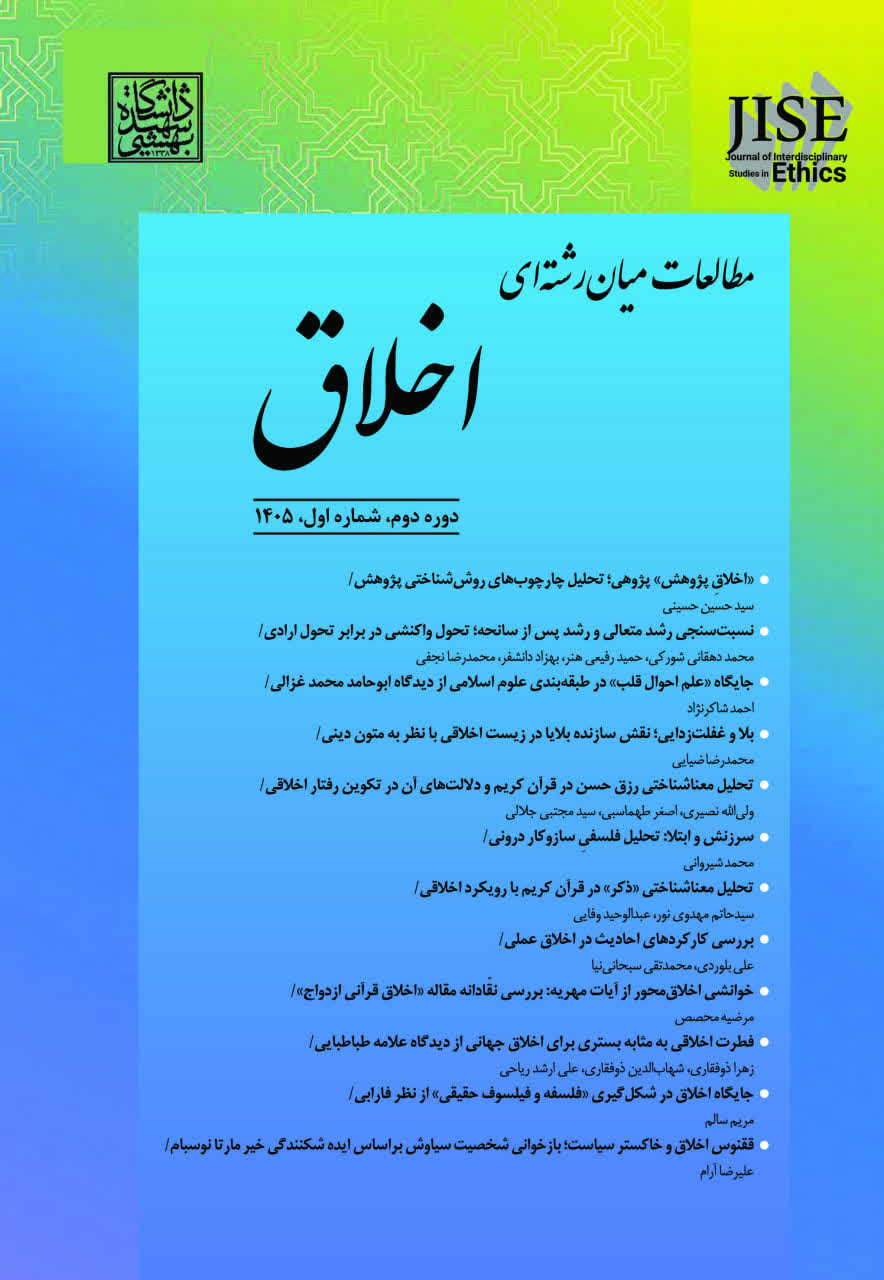
مطالعات میان رشته ای اخلاق

مطالعات میان رشته ای اخلاق

جایگاه «علم احوال قلب» در طبقه‌بندی علوم اسلامی از دیدگاه ابوحامد محمد غزالی

نوع مقاله : مقاله پژوهشی

نویسنده
استادیار گروه ادیان و عرفان، دانشکده الهیات و ادیان، دانشگاه شهید بهشتی، تهران، ایران.
10.48308/jiethics.2026.243873.1060
چکیده
در علوم اسلامی معلوم نیست که متولی احوالات انسان در تعامل با خداوند کدام علم است؟ آیا این امر وظیفه اخلاق است و یا فقه و کلام؟ و یا اینکه باید دانش دیگری به شناسایی و تنظیم احوالات مؤمنان پردازد تا امکان مشاهده و لقای خداوند در دنیا و آخرت را فراهم کند. این مقاله به بررسی جایگاه «علم احوال قلب» در طبقه‌بندی علوم از دیدگاه غزالی می‌پردازد. پژوهش حاضر با بهره‌گیری از چارچوب نظری الهیات معنوی در مسیحیت کاتولیک و با روش تحلیل مضمون از نوع «آزمون نظریه»، نشان می‌دهد جایگاه «علم احوال قلب» در منظومه علوم اسلامی با دانشی که در سنت مسیحی «الهیات معنوی» نامیده می‌شود، قابل فهم است. یافته‌ها بیانگر آن است که این دانش ریشه در آثار صوفیان نخستین دارد و غزالی با نظام‌مند کردن آن، جایگاهی محوری در طبقه‌بندی علوم اسلامی برای آن فراهم ساخته است. «علم احوال قلب» به شناخت و تنظیم حالات درونی مؤمن، درمان امراض قلبی و پرورش فضائل معنوی می‌پردازد و بدین‌سان زمینه تحقق تجربه‌ زیسته ارتباط با خداوند را فراهم می‌کند؛ بدین‌شکل علم احوال قلب در اندیشه غزالی همان کارکردی را ایفا می‌کند که الهیات معنوی در سنت مسیحی بر عهده دارد: تبیین، هدایت و تربیت تجربه ‌زیسته ارتباط انسان با خداوند براساس دستاوردهای دیگر علوم الهیاتی. از نظر غزالی این دانش به مهم‌ترین کارکرد قرآن، یعنی ایجاد ارتباط درونی بین انسان و خداوند می‌پردازد و مشاهده خداوند را تسهیل می‌کند، اما در تقسیم‌بندی مرسوم علوم اسلامی وجود ندارد. غزالی ضمن تعریف و ترسیم ویژگی‌ها، جایگاه مرکزی برای آن در علوم اسلامی قائل می‌شود.
کلیدواژه‌ها

عنوان مقاله English

The Place of ʿIlm al-Aḥwāl al-Qalb (the Science of the States of the Heart) in the Classification of the Islamic Sciences from al-Ghazālī’s View

نویسنده English

Ahmad Shakernejad
Assistant Professor, Department of Religions and Mysticism, Faculty of Theology and Religious studies, Shahid Beheshti University, Tehran, Iran.
چکیده English

Introduction: Recent scholarship has established spiritual theology as an academic discipline concerned with the lived relationship between human beings and God and the process of spiritual transformation. Although Islamic Studies has produced extensive research on Sufism and ethics, the existence of a comparable discipline within the classical Islamic sciences has remained largely unexplored. Consequently, concepts such as ʿilm al-ākhirah (the Science of the Hereafter) and ʿIlm al-Aḥwāl al-Qalb (the Science of the States of the Heart) have often been interpreted as subsidiary themes rather than as elements of a distinct field of knowledge. This study investigates the place of ʿIlm
al-Aḥwāl al-Qalb in the classification of the Islamic sciences from al-Ghazālī's view and examines whether the contemporary framework of spiritual theology can serve as a heuristic model for recovering its disciplinary status.
Methodology: This study employs qualitative documentary research using thematic analysis with a theory-testing approach. Rather than comparing Islamic and Christian traditions, the conceptual framework of spiritual theology, particularly as developed
by Kees Waaijman and Sandra Schneiders, is used as an analytical lens to examine al-Ghazālī's major works, including Iḥyāʾ ʿUlūm al-Dīn, al-Munqidh min al-Ḍalāl, and Jawāhir al-Qurān. The identified characteristics of spiritual theology are tested against
al-Ghazālī's conceptual system to determine the place and function of ʿIlm al-Aḥwāl al-Qalb.
Findings: The findings show that al-Ghazālī organizes the Islamic sciences according to their role in spiritual transformation rather than merely by subject matter. Within this framework, ʿilm al-ākhirah occupies the highest rank and comprises ʿilm al-mukāshafah and ʿilm al-muʿāmalah. ʿIlm al-Aḥwāl al-Qalb belongs to the latter and constitutes a distinct discipline devoted to understanding, cultivating, and regulating the inner states of the heart. Its subject includes both spiritual virtues and vices and provides the foundation for the believer's ethical and spiritual formation. The analysis further indicates that
al-Ghazālī integrates earlier Sufi teachings into a coherent epistemological structure, thereby assigning the study of the heart a central position within beneficial religious knowledge.

Discussion: The study argues that ʿIlm al-Aḥwāl al-Qalb represents the closest functional equivalent in al-Ghazālī's intellectual system to what contemporary scholarship describes as spiritual theology, while remaining firmly rooted in the Quranic and Islamic intellectual tradition. This conclusion does not imply conceptual identity between the two traditions; rather, it demonstrates the usefulness of spiritual theology as a theoretical framework for rediscovering an overlooked discipline within classical Islam. By reconstructing the place of ʿIlm al-Aḥwāl al-Qalb in the classification of the sciences from al-Ghazālī's view, this study highlights the centrality of the heart in his understanding of religious knowledge and offers a new methodological perspective for the study of Islamic spirituality.

کلیدواژه‌ها English

spiritual theology
spiritual studies
the science of the states of the heart
al-Ghazālī
classification of the Islamic sciences
برگر، پیتر (1393). اجبار به بدعت. ترجمه فرهام فریدوالا. قم: دانشگاه ادیان و مذاهب.
بقلی، روزبهان (1351). رسالة القدس و رسالة غلطات السالکین. به کوشش جواد نوربخش. تهران: یلدا قلم.
سراج، ابونصر (1380). اللمع فی التصوف. ترجمه قدرت‌الله خیاتیان، محمود خورسندی، علی اشرف امامی و هنگامه اشرف امامی. کاشان: نشر فیض.
شاکرنژاد، احمد (1397). معنویت‌گرایی جدید. قم: پژوهشگاه علوم و فرهنگ اسلامی.
شاکرنژاد، احمد (1402). بازخوانی انتقادی الهیات معنوی در مسیحیت. الهیات تطبیقی، (29)، 87-101.
شلدراک، فیلیپ (1388). معنویت و الاهیات در مجموعه مقالات الاهیات جدید مسیحی (دفتر نخست). قم: دانشگاه ادیان و مذاهب.
طاهری عراقی، احمد (1363). تقسیم‌بندی علوم از نظر غزالی. معارف، (3)، 81-90.
غزالی، ابوحامد محمد (1365). جواهر القرآن. ترجمه حسین خدیو جم. چاپ سوم. تهران: مؤسسه اطلاعات.
غزالی، ابوحامد محمد (1386). احیاء علوم الدین. ترجمه سید جلال‌الدین مجتبوی. تهران: شرکت انتشارات علمی و فرهنگی.
غزالی، ابوحامد محمد (بی‌تا). احیاء علوم الدین. تحقیق عبدالرحیم بن حسین العراقی. چاپ اول. بیروت: دار الکتاب العربی.
غزالی، محمد (1361). رهایی از گمراهی. ترجمه محمدمهدی فولادوند. تهران: عطایی.
غزالی، محمد بن محمد (1375). احیاء علوم الدین. ترجمه مؤیدالدین محمد. به کوشش حسین خدیو جم. تهران: شرکت انتشارات علمی و فرهنگی.
غزالی، محمد بن محمد (1412). احیاء علوم الدین. تحقیق زین‌الدین ابوالفضل عبدالرحیم بن الحسین العراقی. بیروت: دارالهادی.
فیض کاشانی، ملامحسن (1372). راه روشن. مشهد: انتشارات آستان قدس رضوی.
ملکیان، مصطفی (1398). زمین از دریچه آسمان. تهران: مؤسسه سروش مولانا.
نویا، پل (1373). تفسیر قرآنی و زبان عرفانی. ترجمه اسماعیل سعادت. تهران: مرکز نشر دانشگاهی.
Chan, S. (2009). Spiritual theology: A systematic study of the Christian life. Downers Grove, IL: InterVarsity Press.
Peters, G. (2011). On spiritual theology: A primer. Journal of Spiritual Formation and Soul Care, 4(1), 12.
Waaijman, K. (2002). Spirituality: Forms, foundations, methods (Vol. 18). Leuven: Peeters Publishers.
Waaijman, K. (2007). Spirituality: A multifaceted phenomenon. Studies in Spirituality, 17,
1–113.

  • تاریخ دریافت 17 فروردین 1405
  • تاریخ بازنگری 19 خرداد 1405
  • تاریخ پذیرش 09 تیر 1405
  • تاریخ اولین انتشار 09 تیر 1405
  • تاریخ انتشار 01 فروردین 1405