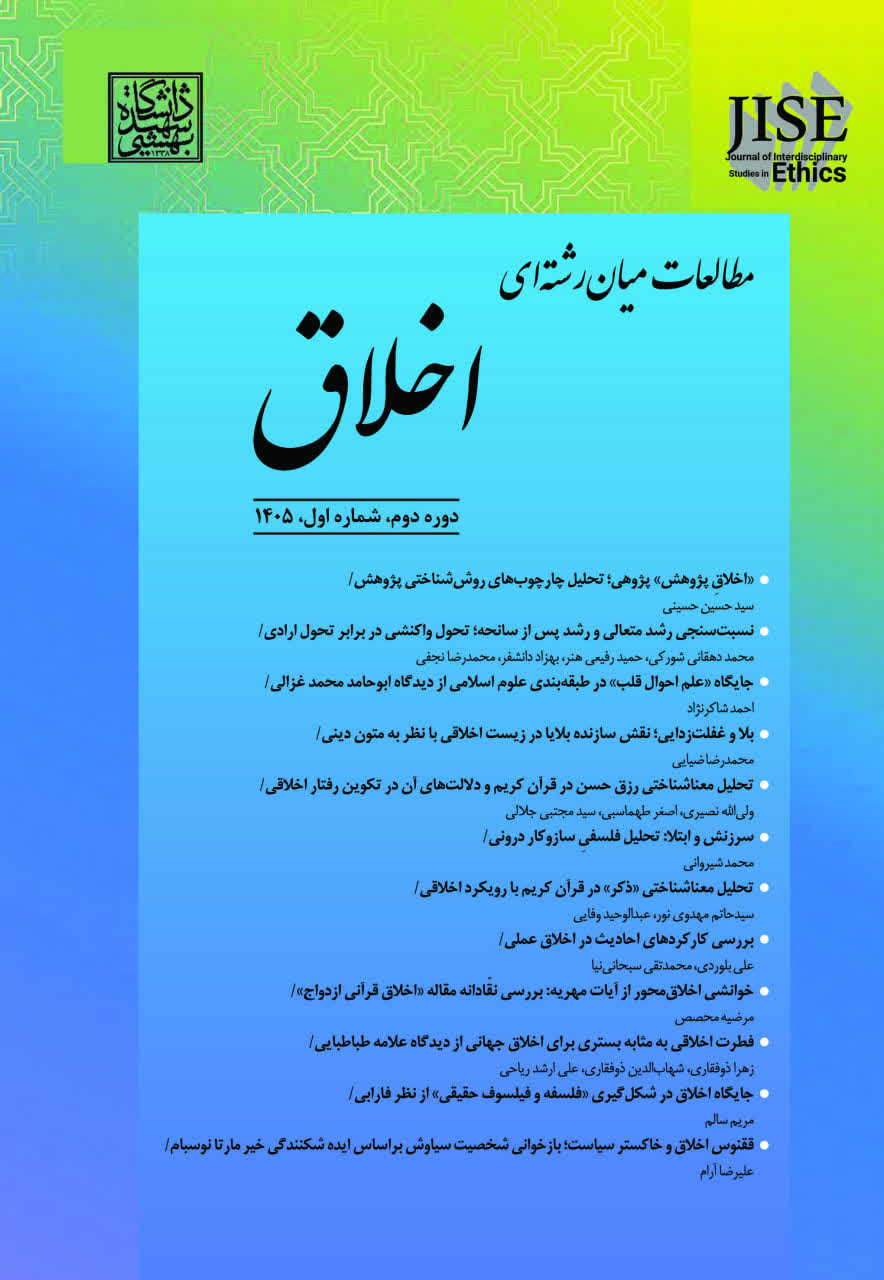
مطالعات میان رشته ای اخلاق

مطالعات میان رشته ای اخلاق

خوانشی اخلاق‌محور از آیات مهریه: بررسی نقّادانه مقاله «اخلاق قرآنی ازدواج»

نوع مقاله : مقاله پژوهشی

نویسنده
دانشیار گروه معارف اسلامی، دانشکده الهیات و ادیان، دانشگاه شهید بهشتی، تهران، ایران.
10.48308/jiethics.2026.243261.1052
چکیده
مطالعات معاصر درباره اخلاق قرآنی، به‌ویژه در حوزه خانواده و جنسیت در سال‌های اخیر گسترش چشمگیری یافته است. یکی از محورهای مهم این رویکرد، نقد تفاسیر فقهی سنتی درباره آیات مهریه است که با وجود این روند، پیوند مفهومی میان مهریه و تمکین در تفاسیر سنتی تحت‌تأثیر ساختارهای پدرسالارانه شکل گرفته است. پژوهش حاضر با روش تحلیلی انتقادی، یکی از آثار جدید را بررسی می‌کند که با تمرکز بر رویکرد اخلاقی به نهاد خانواده از دیدگاه قرآنی با عنوان «عدالت و زیبایی در ازدواج اسلامی: در مسیر اخلاق و قوانین برابری‌طلبانه» منتشر شده، و دربردارنده مقاله‌ای از امیمه ابوبکر، اسماء لامبرت و ملکی الشرمانی با عنوان «اخلاق قرآنی ازدواج» است. در این مقاله با روش تحلیلی‌ـ توصیفی آیات مهریه در پرتوی اصول قرآنی برابری هستی‌شناختی زن و مرد، ازدواج به‌مثابه میثاق غلیظ و ارکان اخلاقی رابطه همسری تبیین شده و چارچوب اخلاق قرآنی در فهم آیات مهریه با رویکردی منحصراً اخلاقی ترسیم شده است. یافته‌های پژوهش نشان می‌دهد که هرچند رویکرد اخلاق‌محور در برجسته‌سازی مقاصد اخلاقی قرآن، توجه به بافت تاریخی آیات و نقد خوانش‌های تقلیل‌گرایانه فقهی، دستاوردهای مهمی دارد؛ اما در برخی تقریرها با انتقال محور تحلیل از تشریع به اخلاق، با خطر تضعیف جایگاه هنجاری احکام و تقلیل نقش فقه روبه‌رو می‌شود. از این‌رو ضرورت دارد با تلفیق ابعاد اخلاقی و فقهی آیات مهریه، چنین استدلال شود که مهریه در قرآن نه عوض معاوضه جنسی، بلکه عطیه‌ای تشریعی در چارچوب یک نظام اخلاقی فراگیر است. بر این اساس اخلاق و فقه، نه در تقابل بلکه در رابطه‌ای طولی و هم‌افزا قابل فهم‌اند و تنها در پرتوی این همگرایی می‌توان خوانشی درون‌دینی، منسجم و روشمند از آیات مهریه ارائه کرد که هم به کرامت و عدالت اخلاقی وفادار باشد و هم مشروعیت تشریع الهی را حفظ کند.
کلیدواژه‌ها

عنوان مقاله English

An Ethics-Based Study of the Quranic Verses Concerning Mahr: A Critical Review of “Quranic Ethics of Marriage”

نویسنده English

Marzieh Mohases
Associate Professor, Department of Islamic Studies, Faculty of Theology and Religious Studies, Shahid Beheshti University, Tehran, Iran.
چکیده English

Introduction: In recent decades, alongside the expansion of gender studies and the emergence of new approaches to Quranic interpretation, the relationship between ethics and Islamic jurisprudence has become one of the most significant areas of inquiry within Islamic studies. One of the major works published in this field is Justice and Beauty in Muslim Marriage, whose chapter entitled “Quranic Ethics of Marriage” seeks to develop an ethics-based framework for understanding familial relations in the Quran.
Findings: The findings of this study indicate that the authors of “Quranic Ethics of Marriage” propose three principal foundations for their ethical reading of Mahr. The first is the ontological equality of women and men; the second is the conception of marriage as a solemn covenant (mīthāqan ghalīẓan); and the third is an emphasis on such concepts as affection (mawadda), mercy (raḥma), and tranquillity (sakīna), which, in the authors’ view, constitute the ethical foundations of the family in the Quran. On the basis of these three principles, they interpret the Quranic verses concerning Mahr as establishing a financial entitlement intended to protect women and as representing respect and responsibility within marital life.
Discussion: An examination of the arguments presented in “Quranic Ethics of Marriage” demonstrates that this reading possesses considerable potential to foreground the ethical dimensions of the institution of the family and to draw attention to the overarching objectives of the Quran. The principal challenge facing this approach, however, concerns the manner in which the relationship between ethics and jurisprudence is defined. In certain instances, the authors move beyond treating ethics as a guiding principle in textual interpretation and employ it as a criterion by which jurisprudential interpretations are evaluated.
Such an approach raises the question of the proper scope and limits of ethical values within the interpretive process, as well as the means by which fidelity to the text may be balanced against contemporary ethical concerns. Within the Islamic tradition, however, jurisprudence and ethics have generally been regarded as distinct yet complementary domains, both of which serve the realisation of the objectives of the Sharia.

From this perspective, Mahr may be understood as a legal–ethical institution that fulfils juridical and economic functions while simultaneously conveying ethical meanings associated with the dignity and honour of women, men’s assumption of responsibility, and the consolidation of the family. A comprehensive understanding of the Quranic verses on Mahr therefore requires simultaneous attention to both their normative and legal structures and their underlying ethical objectives.

کلیدواژه‌ها English

Mahr, Family Jurisprudence, Qur&rsquo
anic Ethics, Islamic Feminism, Maqasid al-Shariah (Objectives of Islamic Law), Dynamic Ijtihad
اصفهانی، محمد بن حسن (1416). کشف اللثام و الابهام عن مقاصد الاحکام. قم: جامعه مدرسین.
امامی نمینی، محمود (1386). ماهیت مهر و نقد مهریه‌های سنگین. مقالات و بررسی‌ها، (87).
جماعتی گشتی، حسین (1402). تعامل و همگرایی اخلاق و فقه در تعهدات و تکالیف زن و شوهر با تأکید بر مضمون آیه درجه. مطالعات راهبردی زنان، (100)، 7-25.                                                                           https://www.jwss.ir/article_189689.html
جوادی آملی، عبدالله (1388). تفسیر تسنیم. قم: نشر اسراء.
خوانسارى، احمد (1355). جامع المدارک فى شرح مختصر النافع. تهران: مکتبة الصدوق.
زحیلی، وهبه (2017). الفقه الاسلامی و ادلته. دمشق: دارالفکر المعاصر.
سبحانى تبریزى، جعفر (بی‌تا). نظام النکاح فى الشریعة الاسلامیه. قم: بى‌نا.
شهید اول، محمد بن مکی (1412). الدروس الشرعیه فی فقه الامامیه. قم: مؤسسه النشر الاسلامی.
طالقانی، محمود (1360). پرتوی از قرآن. تهران: شرکت سهامی انتشار.
طباطبایی، سید محمدحسین (بی‌تا). المیزان فی تفسیر القرآن. ترجمه سید باقر موسوی. قم: جامعه مدرسین.
طوسی، ابوجعفر محمد بن حسن (1981). التبیان. لبنان: دارالعلم للملایین.
طوسی، محمد بن حسن (1387). المبسوط فی فقه الامامیه. بی‌جا: المکتبه المرتضویه.
طوسی، محمد نصیرالدین (1387). اخلاق ناصری. تهران: انتشارات خوارزمی.
عاملی، حسن بن زین‌الدین (1374). معالم الدین و ملاذ المجتهدین. قم: دفتر انتشارات اسلامی.
علامه حلی، احمد بن فهد (1411). المهذب البارع. قم: جامعه المدرسین.
کرکی، علی بن حسین (1411). جامع المقاصد. قم: م‍ؤسسه آل‌البیت لاحیاء التراث.
مدرسی، سید محمدتقی (1419). من هدی القرآن. تهران: دار محبی الحسین.
مسکویه، احمد بن محمد (بی‌تا). تهذیب الاخلاق و تطهیر الاعراق. قم: انتشارات بیدار.
مکارم شیرازی، ناصر (1374). تفسیر نمونه. تهران: دارالکتب الاسلامیه.
میرصانع، سید محمدباقر (1403). اجتهاد اخلاق‌گرا طرحواره تأثیر آموزه‌های اخلاقی بر استنباط فقهی. اخلاق‌پژوهی، 7(2)، 51-76.      https://doi.org/10.22034/ethics.2024.51517.1696
نراقی، محمدمهدی (بی‌تا). جامع السعادات. بیروت: دار اعلمی.
Abou-Bakr, O., Lamrabet, A. & Al-Sharmani, M. (2022) ‘Quranic Ethics of Marriage’, in Mir-Hosseini, Z., Al-Sharmani, M., Rumminger, J. & Marsso, S. (eds.), Justice and Beauty in Muslim Marriage: Towards Egalitarian Ethics and Laws. London: Oneworld Publications, pp. 28–56.
Al-Hibri, A. (2009). Marriage and Divorce: Legal Foundations, In John L.
Ali, K. (2006). Sexual ethics and Islam: Feminist reflections on Qur'an, hadith, and jurisprudence. Oxford, England: Oneworld Pub.
Ali, K. (2010). Marriage and slavery in early Islam. Cambridge, Mass: Harvard University Press.
Ali, K. (2016). Sexual Ethics and Islam: Feminist Reflections on Qur’an, Hadith and Jurisprudence. London: Oneworld Publications.
Al-Sharmani, Mulki (2014). Islamic Feminism: Transnational and National.
Badran, M. (2009). Feminism in Islam: Secular and religious convergences. Oxford, England: Oneworld Publications.
Barlas, A. (2002). Believing woman in Islam: unreading patriarchal interpretations of the Quran. Austin, Tex: University of Texas Press.
Barlas, A. (2019). Believing Women in Islam: Unreading Patriarchal Interpretations of the Qur’an. Austin, Tex: University of Texas Press.
Bauer, K. & Hamza, F. (2024). Women, households, and the hereafter in the Qur’an: a patronage of piety by, New York, NY, Oxford, Oxford University Press, (hardcover).
Bauer, K. (2015). Gender Hierarchy in the Qur’an, Medieval Interpretations Modern Responses, Cambridge University Press.
Bauer, K. (2015). Gender Hierarchy in the Qur’an: Medieval Interpretations, Modern Responses. Cambridge: Cambridge University Press.
El Omari, D., Hammer, J. & Khorchide, M. (2020). Muslim Women and Gender Justice: Concepts, Sources, and Histories. London: Routledge.
Esposito, eds., The Oxford Encyclopedia of the Islamic World, Oxford
Hassan, Riffat (1991). “Muslim Women and Post-Patriarchal Islam.” After patriarchy: Feminist Transformations of the world Religions. Ed. Paula M. Cooey, William R. Eakin &
Jay B. McDaniel. Maryknoll, NY: Orbis Books, 39-64.
HidayatuIIah, Aysha (2014). Feminist Edge of Quran. New York, oxford university press.
Ibrahim, C. (2020). Women and Gender in the Qur’an. New York: Oxford University Press.
Mir-Hosseini, M., Al-Sharmani, M., Rumminger, J. & Marsso, S. (2022). Justice and Beauty in Muslim Marriage: Towards Egalitarian Ethics and Laws, Oneworld Academic.
Mir-Hosseini, Z. (2022). Journeys toward Gender Equality in Islam. London: Oneworld Publications.
Mir-Hosseini, Z., Al-Sharmani, M., Rumminger, J. & Marsso, S. (2022). Justice and Beauty
in Muslim Marriage
: Towards Egalitarian Ethics and Laws. London: Oneworld Publications.
Shaikh, S. (2013). Feminism, epistemology and experience: Critically (en) gendering the study of Islam. Journal for Islamic Studies, 33, 14-47.
Wadud, Amina (1999), Qur'an and Woman: Rereading the Sacred Text from a Woman's Perspective. New York: Oxford University Press.
Wadud, Amina (2004). Qur'an, Gender and Interpretive Possibilities. Hawa 2.3 (2004): 316-336.
Wadud, Amina (2006). Inside the Gender Jihad: Women's Reform in Islam. Oxford: Oneworld.
دوره 2، شماره 1 - شماره پیاپی 1
فروردین 1405
صفحه 191-214

  • تاریخ دریافت 30 دی 1404
  • تاریخ بازنگری 26 خرداد 1405
  • تاریخ پذیرش 02 تیر 1405
  • تاریخ اولین انتشار 02 تیر 1405
  • تاریخ انتشار 01 فروردین 1405